Content warning: This post includes discussion of self-harm, mental health struggles, and references to suicide. If you find these topics difficult, this might not be the best read for you.
My name is Muhammed Tariq. For the past six years as of the time of writing, however, I’ve called myself an agnosticIt’s usually easier to just say the word “atheist”, though. I believe that the existence of an Abrahamic deity is extremely unlikely, but that the existence of one in some other form — especially the kind humans haven’t formulated — is impossible to ascertain. atheist.
This, solely, is enough to tell a story to anyone who would otherwise have had only a cursory outlook on me. It implies that I was raised by my parents into Islam, that I may have been taught its rituals, its values, its practices; that I then, during teenagehood, in some apparent and perhaps selfish act of indifference to their dismay, disavowed all of it.
None of this is untrue. I went to a voluntary-aided Islamic primary school in the first seven years of my formal education, and I spent five in a secondary school in which, though it had no religious character, the overwhelming majority of pupils were Muslims. I was taught that I needed to learn how to readAll this entails is learning how to pronounce the words. I could read Arabic quite fluently, but it pretty much meant nothing to me; I couldn’t understand it. the Arabic that made up the Quran, that I had to pray five times a day, that there were great wars that the prophet I was named after fought, that there was a specific method I needed to use to clean myself, that eternal hell lies in wait for those who disbelieve — but that temporary hell lies in wait for Muslims who murder and rape.
When I renounced my faith, I was abused for it. The communities that surrounded me dealt insults, death threats, incessant debate and derision; I was bullied, excluded, and disparaged, told I was going to hell while drying my hands in the school toilets, told that I was gay,The line of logic that some followed was that, A — “Islam is unquestionably the only correct religion”, and that, B — “Islam prohibits homosexuality, so homosexuals cannot be Muslims”, meaning that C — “Muhammed must no longer be a Muslim, so the only explanation must be that he’s a homosexual” is necessarily true. This is obscene and wildly objectionable; my sexual orientation has no bearing on my belief in the existence of a particular deity, you can be both a homosexual and a Muslim (or one and not the other, or neither), and this is extremely homophobic. and told I deserved to be executed.
How can somebody who’d grown up so bound within the mould created for them have so suddenly shattered it? Vulnerable to immense social penalty and vilification, why was I so vocal about it? What even caused this to happen in the first place?
We know that every object requires a maker. A house requires a builder, and clothes require a tailor. Nothing comes into existence on its own. In the same manner, there must be a creator for the heavens and the earth. There must be a power who controls the movement of the sun and moon. The Quran states: “Who is it that created the heavens and the Earth? Who sends rain down to you from the sky and with it, He causes orchards to grow, full of beauty? It is not in your power to cause the growth of trees. [Can there be another] deity besides Allah?
— Tas-heelul Aqaa-id 3A textbook and a curriculum for young children under ten to learn about the core principles of Islam.
The circumstances that led me to renounce my faith over half a decade ago differ sharply from the reasons I remain an atheist now.
Being in an Islamic primary school is not as strange as you might think. The vast majority of my day was actually completely normal; just an hour tacked onto the end for Islamic studies and people beginning to grasp the rituals they had to perform; everyone thankfully far too young to care much about hot-button issues or start strongly-worded arguments with each other. I questioned nothing about my deen, mainly because it wasn’t such a salient thing.
When I was just nine years old, on a particular short walk from school, my parents casually brought up the idea that I should start trying to memorise the entire Quran. They emphatically promised me that if I did it, making me a hafiz, they’d do anything I wanted — they’d buy anything; they’d take me anywhere I wanted, and so on. In light of what seemed like unlimited wealth and prowess, my junior self gleefully accepted.
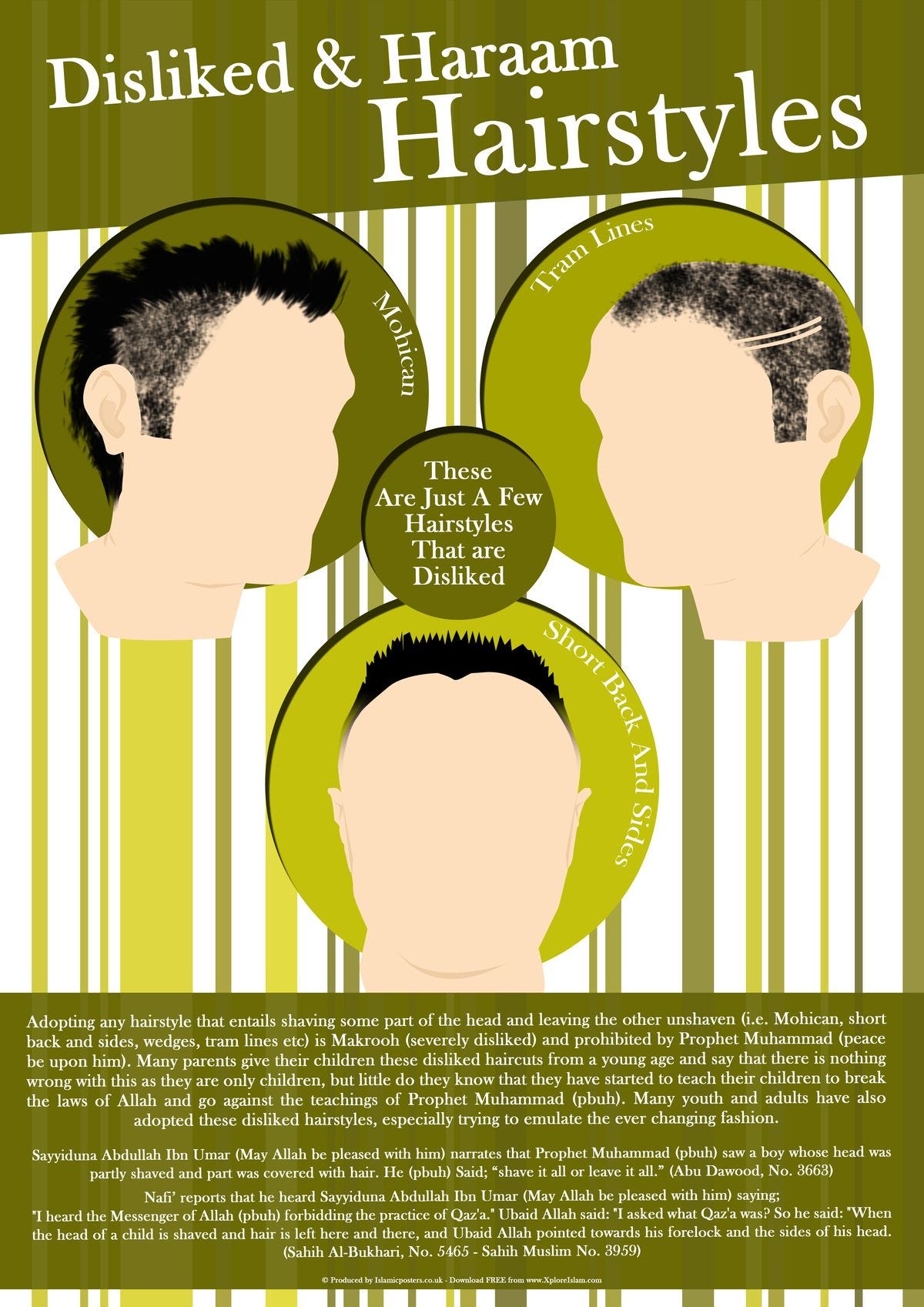
What I didn’t know was that I had unwittingly volunteered to spend three hours after school every day in a madrasah, sitting in a room blurting out Arabic words I couldn’t understand from a book I didn’t care about to a person I didn’t know. I’d idly stare at the walls lined with posters on the hairstyles I wasn’t allowed to have or the metals of the jewellery I wasn’t allowed to wear or the pets I wasn’t allowed to keep just to pass the time.
If I reach inwards deeply, I can feel the dread wash over me as I left on the first day learning tajweed realising that I didn’t enjoy this but that my parents had held me to impossibly high standards and that there was no backing out lest I allow myself to be corporally punished. Regularly evoked was the burning sensation of monotony and apathy; the sensation pervading my chest, ebbing and rising periodically with the impotent, impatient fury I feel when I know I would so deeply love to do anything else.
About one or two years passed in which I put up with it. I’d regularly plead with my parents to not go on as many days as possible — pleas that were usually ignored or met with consequences. I didn’t acknowledge it at the time, but I didn’t want to memorise the Quran, and I was deeply scared to tell my parents about it; even more so being under the impression that my thoughts betrayed my religion.
The imam leading the madrasah had a punishment of making children who didn’t follow instructions write lines. The punishment for forgetting your planner (a notebook he’d use to track the verses of the Quran to memorise) was a double-sided page of lines emblazoned with the words, “I promise that I will never forget my planner again”, coursing down through the page. Similar punishments ensued for other shortcomings, and crucially, they stacked.
One day, by managing to forget my planner, falling short on what I was expected to memorise, and coming in late, I was assigned three double-sided pages, totalling six pages, to be completed in the three hours of free time I had before I was forced to bed.
I stormed into my house later that day and furiously kicked my shoes off, sending them flying and crashing onto my stairs. I hurled my bag onto the floor and distressedly insisted that I was never going back there again because I was miserable and had been for more than a year, and that spending time here was such a waste of my life. I regretted not being more persistent sooner, and I was aware that I was sorely wasting my life doing this.
For once, my parents agreed with me, and they pulled me out of that madrasah, putting me into another one. This time, I could leave a bit earlier, and the workload was less demanding, but nothing really changed. I still wasted two hours every school day, and I was still trapped in the local minimum of being miserable enough to affect how I experienced life, but not miserable enough to insist and demand change from my parents. They hung the privilege of everything I had over me to show that they could take it back if I dared to completely stop.
Things continued like this until just before Covid hit, when my parents allowed me to switch to learning it online for just one hour per day. Things began to change wildly from here.
Here’s a very rough estimate of just how many hours of my childhood I lost over the three years that I was forced to do this, given that there are 200 days in a school year (rounding up to account for the time spent outside of madrasah).
This is haunting. In that time I could’ve read 120 booksAssuming each book takes 10 hours to read. or watched 600 moviesAssuming each movie is 2 hours long. or taken 10 GCSEsOne GCSE usually requires about 120 hours of supervised classroom time. Similarly, I could also have done 3 A-levels, which require ~360 guided hours of learning each. or trained for ten marathonsAssuming each marathon takes 100 hours to train for. or learned the drums or become a serious junior runner or won local chess tournaments or just had 1200 more hours of childhood.
I often tell people that in childhood I was at a deficit in some regard that I couldn’t perceive. I think this is why.
During Covid, and at just twelve, I battled the most extreme mental health issues I had ever faced. I began experiencing suicidal ideation in September 2020, which developed into self-harm by cutting two months later in November. My emotions were a rapidly undulating mess cycling between extreme depression and unadulterated euphoria at the dictates of others’ extremely small actions, mostly settling at the worse end of things. Twice a day I’d make the pilgrimage to my school’s toilets to cry my eyes out, or to my bed at home to do much the same; life was this monotonous mess where I’d helplessly wait for the suffering to pass so I could revel in the numb.
Hard times usually lead people to religion rather than away from it.A longitudinal study conducted before and after the 2011 Christchurch earthquake found that “religious faith increased among the earthquake-affected, despite an overall decline in religious faith elsewhere”. Perhaps this is because hardship often acts like a pressure test — when religion helps interpret, support and explain an experience, a given person’s faith would be likely to increase. Conversely, when the experience doesn’t do that, or when it goes as far as to contradict one’s beliefs, faith may weaken. The Quran states that Allah is “most merciful” and “all-loving”. I remember this point strongly emphasised to me throughout childhood, often told to be orders of magnitude stronger than the love a mother has for her children.
In the moments of pain I went through I instead felt abandoned and resented. No longer did what I was going through make sense in light of the explanation of a deity who loved me — not at all more than that of a cold and indifferent universe in which conscious beings are left regularly subject to a salvo of suffering without any recourse; of a universe by which children die of leukaemia and that is it;Muslims don’t quite believe this — there’s an afterlife, after all, in which that child is believed to be assured heaven. I still thought it was wrong, just as it would be wrong to punch someone in the face really hard and then give them £1 million. Why punch them at all in the first place if you’re omnipotent and supposedly all-merciful and all-loving? of a universe that was not created by the deity I once thought.
I imagine that it’s incredibly easy to alternatively think of my hardship as a test of my iman; that if I prayed more and I turned to Allah that my suffering might have been cured; that I simply did not try hard enough — my faith too weak, my prayers insufficient, my efforts insincere.
Yet I find this impossible to accept. It would mean interpreting the absence of relief not as evidence against the belief, but as evidence against myself — callously telling a boy enduring boundless hardship that it is his fault because he should’ve prayed harder. Such an interpretation would accommodate every possible outcome: if a prayer brought relief, it’d confirm Allah’s mercy; if it didn’t, the suffering would be called a test, a punishment, a source of future reward, or the consequence of insufficient faith.
It felt hollow and disingenuous. I saw myself, a supposedly innocent 12-year-old boy, as either culpable for my potential disbelief in Islam or culpable for my lack of prayer.
The conflict between Adam’s special creation and the scientific account of human common ancestry, and the evolution that followed, was another point of contention. I was explicitly told to accept all the science that led to modern medicine, physics, computing and chemistry, but that the mechanisms by which humans came about were complete nonsense peddled by liars under the guise of science and reasoning simply because it was difficult to reconcile with religion. Every one of my then-peers, and every source I knew of, vehemently rejected the proposition that humans had ever been a product of evolution regardless, and so I just followed that line of reasoning — one which led me to have to make a binary choice between evolution and creationism.This isn’t how I view it nowadays, but back then I viewed these ideas as mutually exclusive. I’m somewhat confident you’ll be called an “innovator” for suggesting they can be reconciled.
There was a man, an atheist, by the name of Darwin, who lived about 200 years ago. He refused to believe in Allah as the creator of the skies and the earth; the creator of the humans and animals. People asked him, “if you don’t believe in any creator, then who created us?” He had no answer for this. So, to prove himself to the people, he made up a false theory saying that human beings evolved from monkeys; i.e. the human race were all monkeys once upon a time and slowly, over time, they turned into humans.
What a false theory this is! Can anyone who is sane in his mind believe such nonsense? […] Imagine if someone insulted you by calling your parents and grandparents monkeys! Well… that is what Mr. Darwin says. He spent his whole life trying to prove that his great grandparents were monkeys. Well, if he wants to prove that his ancestors were monkeys, then let it be. Our grandparents were for sure not monkeys. […]
This theory, called “Darwin’s Theory of Evolution” is taught in schools and universities all over the world, teaching children that their origin was from a monkey. We should understand well that this theory is completely false. […] If a person believes in the theory of Darwin, he is no longer a Muslim.
— Tas-heelul Aqaa-id 7The same kind of textbook as Tas-heelul Aqaa-id 3, designed for older children.
It’s incredibly hard to be convinced when the cases I saw most commonly crop up against evolution, like here, make fun of the false position that we came from the same kind of monkeys that exist nowadays (and also make so many other unrelated false claims).
Even if I’d set this issue aside, I felt that there were issues downstream in the problem of suffering: not only were we supposed to believe that humans suffered for good reason, but now (and far more crucially) we were supposed to believe that the mechanism by which animals evolved — survival of the fittest; the death of the unfit — was defined by suffering, with countless animals grievously mauled and left to rot and die in shocked agony routinely. David Attenborough, English broadcaster and natural historian, famously responded to complaints about the amount of animal violence on his shows:
“People who accuse us of putting in too much violence [should see] what we leave on the cutting-room floor.”
What is the point of making animals suffer?See the beginning of Alex O’Connor’s Surrounded video. At least in the human case one could point to the purpose of personal growth (which in some ways ended up perversely true for me) — though even that sentiment is troubling. In no way did it make sense to my junior self, or even to me nowadays.
I was being told that an omniscient God had manufactured the universe such that the events that would unfold ended up happening. He knew that billions of humans and quadrillions of animals would experience immeasurable suffering; that people in certain geographical locations were more likely to be Muslims than others; that I’d end up deconverting and damn myself eternally to hell, and he knew that the vast majority of humanity would face the same fate. God, empowered with the effortless choice of making all animals herbivores, or eliminating childhood cancer, or ending death, chose not to. Why?
Despite having been told by my peers that I just needed to ask Islamic scholars more, or that we had free will and that suffering was caused by humans,This doesn’t explain animal suffering, and didn’t work in the view I held (that we can’t have free will under an all-knowing God). Even if we granted that, we’d have to accept that God gave us free will knowing exactly just how much suffering would occur as a result of it, and decided to change nothing about the human psyche to reduce it — this failed to convince me well. or that I just had to put up with it because Allah’s existence was unquestionable and rejecting it was a sin worse than murder or rape,Some people argue that there are purposes to what he does that we (as humans) cannot perceive. I wouldn’t have been able to imagine what God, who is omnipotent, is so compelled to do that he will cause quadrillions to suffer. I slowly stopped believing it all. It progressed from not practising any element of my faith to being completely unsure of it to telling my close friends I wasn’t a Muslim. At that point, I told myself that under no circumstances would I tell my parents until I had full financial independence from them.
An independence that I surely had when I told them at the age of 13.
It was during a completely mundane argument I had with my parents in my room about me praying, or reading the Quran, or something like that, and it just slipped out.
No, I really don’t believe in Allah.
It wasn’t a massive surprise for them. For weeks prior I’d argued with them by raising every objection I could possibly think of about Islam while still affirming that I was definitely, completely, “still a Muslim”. I distinctly remember them towering over me though, looking at me with this sort of furious disappointment.
I knew I shouldn’t have said that, and that I may have seriously messed up. I was extremely afraid — afraid that I’d be hit, that they’d send me to Pakistan, that they’d take away everything I loved, that they’d kick me out as soon as I turned 18, or that they’d disown me. The small fleeting burst of relief I gave myself finally letting those words out of my mouth paled in comparison to the immense consequences I left myself completely vulnerable to. I had put myself in danger.
But, strangely, it was all a big nothing.
They were upset and they argued quite a lot with me, but they eventually left my room and left me alone. In the days following I debated with them quite a lot, and every discussion ended up in me repeating the same things to them to no avail. Eventually, it devolved into my mum telling me that “I just needed to believe it from my heart”, and that “I just needed to listen to [her]”.
I then began telling people from my school. I was already incredibly hated by my peers — I was looked upon as annoying and fat, which meant I was an easy target — but this now led to even more hatred and vitriol than I thought I could get.
One particular person tried to debate with me every lesson of my GCSE Geography classes (to little avail as I actually tried doing the work). During lunch, I once entered my maths teacher’s room to find seven other pupils and the teacher himself, who immediately began interrogating me on why I was no longer a Muslim.
People at school threatened to beat me up for leaving the religion. While I was packing up during a maths class, a kid came up to me and told me that he’d hurt me (I remember some vague death threat being made, but not what it exactly was) if I continued disbelieving — the tone with which he was saying that might have implied he was joking, but it was nevertheless extremely weird to say. I was sufficiently worried to report it, and he did get in trouble — thankfully, his remarks never translated into actions.
Being well-spoken (sounding quite posh), spending lots of time around people who came out as gay, and being an open atheist, people thought that I left Islam because I was gay, adding “batty boy” to the list of insults I had faced on a regular basis. This happened within the same school whose pupils erupted in anger when my Drama teacher gave a presentation during Pride Month which contained a woman with a hijab who was a lesbian, in which my entire row (excluding me) put out the Andrew Tate sitting pose as some strange form of protest.
I had to carefully decide where to go during lunchtimes, usually resorting to walking around less-wandered corridors or hiding under a stairwell to avoid the masses. While washing my hands in the school toilets someone came up to me and asked me why I left Islam; when I told them to mind their own business and that this clearly wasn’t the time or place, he told me I was going to hell and then walked away.
My disbelief was treated as evidence that I was immoral, attention-seeking, or miserable, and teachers stood by and did practically nothing, whether by obliviousness or by oppression.
People began to weaponise the mental health issues I had faced, falsely imputing them as the sole reason for my disbelief. Some carried this patronising demeanour, seemingly emboldened by the depraved satisfaction of knowing that I was in a mental health crisis while also disbelieving — reinforcing the bigotry lacing their thoughts; their presumption that anyone who rejects Islam does so because there is something massively wrong with them.
None of this helped me want to continue worshipping the religion. Apostasy now felt like cutting myself off from the unadulterated toxicity I had to battle against daily; verbalising it felt like the only stand I could take against these horrible people. I could’ve shut up about it and lied for three years, but that’d go against my character, and, given that I wasn’t the only ex-Muslim there, somebody had to do it.
This all happened in a UK state school with technically no religious character!
There was only one instance in which another Muslim openly treated me with respect for my beliefs. Someone made a jab at me not being a Muslim (of course, in a queue to wash my hands in the school toilets), but this time, someone else in that queue interjected and suddenly said:
No, you shouldn’t say that. We should treat him with respect; he doesn’t say that stuff to you, doesn’t he?
I think that was possibly the only time someone else really stuck up for me like that, and it was someone I hadn’t talked to at all. It was a reminder that there are so many tolerant, empathetic and reasonable Muslims out there, and that the people I was unfortunate enough to be burdened with in my communities were not at all representative of every Muslim in the world. It was hard to see for my younger self at the time (and fair enough to him), but it is something I acknowledge heavily now.
Over the years things got a lot better. Between April and September of 2021, my mental health improved by orders of magnitude, and then continued improving overall from there — today, I’m extremely happy to say that my mental health is great. The bullying faded as people began to shift their focus to exams, and after I left secondary school, I was never treated as horribly as I’d been back then. A lot has happened between me and my parents, and they now treat me far better, and they are always doing their best for me.
I went to Pakistan twice between then and now. Given my apostasy, it wasn’t at all a smart decision — while there isn’t an explicit punishment for disbelief, any externalisation of this could lead to accusations against me, and accusations against me could lead to me being mobbed and killed on the streets, with at least no recourse and at most encouragement for the act of doing so by the Pakistani authorities. The entire time, I firmly pretended that I was a Muslim, and I was good at doing so — everyone was none the wiser. It is a horrible reality that once you are known to the public as a Muslim there is no turning back lest you accept that death is imminent with open arms.
I don’t completely rule out the possibility that there is a deity as I once did. I think that the likelihood of the existence of one that we know of is vanishingly low, and that the existence of one who claims to be personal, merciful and all-loving is even less so, but for differing reasons than when I was twelve. I resonate far less with what made me originally break out; that I was suffering, and that this would never happen under a loving God. I still think that my suffering is very unlikely in that case, but it’s something I’m now reluctantly happy to concede for the sake of debate. I still think that any attempt to reconcile Islam with modern science seems ad-hoc, but I no longer see it as an “objection” to the validity of Islam’s truth claims more than it seems like a knee-jerk reaction to maintain credibility in light of modern scientific knowledge.
However, I’m still compelled by the arguments surrounding animal suffering (and, to an extent, human suffering), and about the broader question of why an omnipotent and merciful creator would choose this world over a less brutal one.
It is still scary to tell people that I’m an atheist, not because it is generally looked down upon in society at all, but because the fact that I once was a Muslim is. A small spike of fear still lingers whenever I have to admit that, even though my name is Muhammed, I’m not a Muslim. Especially present is the fear when I must directly do so to somebody who is themselves a Muslim; the fear of an imminent and very heated conversation, being called a murtad, or being socially rejected or excluded on the basis of my beliefs.
This fear might no longer seem as rational when I now spend my time around lovely, kind and tolerant people — enough so to be comfortable to write this post and know that many will give me kindness in return. That fear matters less now because I now have the agency to choose who surrounds me.
However, that freedom is the outcome of the half-decade in which I ceaselessly wished I could get to where I am now.
Special thanks to Sophie, Youssef, and Ben for helping me write this and giving me feedback!